45 #Chips in 30 Days: #OpenSource #ASIC at its best! https://t.co/BWwmbbcxEP #semi pic.twitter.com/csVfe3AFED
— Wladek Grabinski (@wladek60) March 8, 2021
from Twitter https://twitter.com/wladek60
March 09, 2021 at 12:01AM
via IFTTT

45 #Chips in 30 Days: #OpenSource #ASIC at its best! https://t.co/BWwmbbcxEP #semi pic.twitter.com/csVfe3AFED
— Wladek Grabinski (@wladek60) March 8, 2021
Abstract: Due to the spread of COVID-19 across the world and the increased need for non-contact thermometers to prevent the spread of disease, a new electronic thermometer has been designed and implemented for measuring human body temperature from a distance. This device is currently in use at building entrances to measure the body temperatures of employees, students, and customers. This system is designed using low-cost easy-to-assemble open-source electronic components. The system consists of seven main parts: an Arduino UNO microcontroller, an infrared (IR) thermometer for non-contact temperature measurements (GY-906 MLX90614ESF module), an IR motion sensor (TCRT 5000) for the purpose of contactless initiation of the system, a graphic LCD to display results, a DS3231 clock module for a real-time clock and calendar, and a micro-SD storage board to store device audio instructions.

HardwareX, https://t.co/8AD4W1BmPv by Elsevier, is an open access journal established to promote free and open source designing, building and customizing of scientific infrastructure (hardware).https://t.co/HpydEFSA0I#semi pic.twitter.com/GX8GzAjClT
— Wladek Grabinski (@wladek60) March 8, 2021
The Silicon Saxony industry association has said funding for the #European #semi industry needs to be comparable with that in the United States and also warned against delay https://t.co/IYbcjyznAB pic.twitter.com/jw611i34O7
— Wladek Grabinski (@wladek60) March 7, 2021

Released on 5 March 1981, the ZX81 was the successor to 1980s ZX80 and, like its predecessor, was based around a Z80 CPU. Two years later, in summer 1983, I bought my Oric1, my first home computer based around a 8-bit 6502A running at amazing CPU clock of 1 MHz. For a reference, next to the Oric1 logo, is Raspberry Pi Zero based around a 32-bit ARM11 running at CPU clock of 1 GHz. What an astonishing CPU clock rate gain over less than 4decades = 1000 time faster:


Released on 5 March 1981, the #ZX81 was the successor to 1980s #ZX80 and, like its predecessor, was based around a #Z80 #CPU https://t.co/lYSFzmr6FM #semi pic.twitter.com/ZhgOZEIKls
— Wladek Grabinski (@wladek60) March 5, 2021
[i-Micronews] #Apple iPhone 12 series #mmWave #5G Chipset and Antenna - https://t.co/2mH1i77Se9 #semi pic.twitter.com/BV10LY9Aqb
— Wladek Grabinski (@wladek60) March 5, 2021
|
Dear authors,
Due to the requests of community, the deadline for paper submission has been extended to 31st March 2021 (his is firm date). You can present your papers online or physically.
We cordially invite you to attend and submit your papers for the IEEE - 3rd International Conference on Electrical, Communication, and Computer Engineering (ICECCE 2021), which will take place at Kuala Lumpur, Malaysia on 12-13 June 2021. The event will be highly international with the technical collaboration of Multimedia University Malaysia, Aksaray University, Turkey, University of Buner, Pakistan, International Islamic University Islamabad, Pakistan, and IEEE .
ICECCE 2021 aims to bring together leading academic and industrial researchers, scientists, engineers and practitioners to exchange the latest research ideas, methods, results, and share experiences, on all theoretical, experimental and applied aspects of Electrical, Communication and Computer Engineering. ICECCE 2021 will provide a unique interdisciplinary and multidisciplinary forum for researchers, practitioners and educators to present and discuss the most recent innovations, trends, practical challenges encountered and intelligent solutions adopted in their respective fields
The conference covers many topics under areas of Electrical, Communication and Computer Engineering and can be seen at www.icecce.com
ICECCE 2019 and ICECCE 2020 were technically co-sponsored and indexed by IEEE. The Proceedings of these conferences have been published at IEEE Xplore Digital Library. ICECCE 2019 and ICECCE 2020 are also indexed in SCOPUS. “Accepted papers will be submitted for inclusion into IEEE Xplore subject to meeting IEEE Xplore’s scope and quality requirements”
We shall be looking forward to your paper contributions and participation. We hope that attending the conference will provide an opportunity to meet academic and industry experts to exchange ideas about the latest technologies. We are sure that your stay in the beautiful and historic city of Kuala Lumpur will be very pleasant and enjoyable.
Important Dates:
-- Regards -- ICECCE 2021 Conference Organizing Team;
#Chiplets For The Masses https://t.co/lqv2mYQonz #semi pic.twitter.com/yq1nENlZRl
— Wladek Grabinski (@wladek60) March 3, 2021
#GlobalFoundries (a unit of Abu Dhabi’s state-owned fund Mubadala) pours $1.4B into fab expansion amid #chip demand boom https://t.co/d3fU1dthJu #semi pic.twitter.com/EMTWiPxYcq
— Wladek Grabinski (@wladek60) March 3, 2021

[The Register] Wuhan Hongxin #semi 7nm ambitions are dust. One of #China’s next-generation #chipmakers appears to have collapsed, potentially hampering the nation’s march to silicon-self-sufficiency https://t.co/Vx2bi2TUeq pic.twitter.com/1iCKL4KcJu
— Wladek Grabinski (@wladek60) March 2, 2021
Pumping perovskites into a #semi platform https://t.co/DC9C7OL1q8 pic.twitter.com/gle4f9tNrB
— Wladek Grabinski (@wladek60) March 1, 2021
[1] M. Müller, P. Dollfus and M. Schröter, "1-D Drift-Diffusion Simulation of Two-Valley Semiconductors and Devices," in IEEE Transactions on Electron Devices, vol. 68, no. 3, pp. 1221-1227, March 2021, doi: 10.1109/TED.2021.3051552.
Abstract: A two-valley formulation of 1-D drift-diffusion transport is presented that takes the coupling between the valleys into account via a new approximation for the nonlocal electric field. The proposed formulation is suitable for the simulation of III–V heterojunction bipolar transistors as opposed to formulations that employ the single electron gas approximation with a modified velocity-field model, which also causes convergence problems. Based on Boltzmann transport equation simulations, model parameters of the proposed two-valley formulation are given for GaAs, InP, InAs, and GaSb at room temperature. Applications of the new formulation are also demonstrated.
Code/Dataset: This article contains datasets made available via IEEE DataPort, a repository of datasets intended to facilitate analysis and enable reproducible research. Click the dataset name below to access it on the IEEE DataPort website.
[2] A. Rawat et al., "Experimental Validation of Process-Induced Variability Aware SPICE Simulation Platform for Sub-20 nm FinFET Technologies," in IEEE Transactions on Electron Devices, vol. 68, no. 3, pp. 976-980, March 2021, doi: 10.1109/TED.2021.3053185.


#SEMI Applauds President Biden, Bipartisan Congressional Leaders for Supporting Semiconductor Supply Chain Incentives // Something like $37 billion. The problem isn't money // https://t.co/Os4lOemovq pic.twitter.com/3tjYQ5ybS4
— Wladek Grabinski (@wladek60) March 1, 2021

Each event typically consists of five long talks/lectures on different topics (of three hours each, a sufficient time to give both overview and advanced details about the topic), given by academic professors or qualified experts coming from companies or research centers. In this way the academic and industrial approaches for research and state-of-the art progress are presented.In the last years, an increasing number of microelectronic companies are establishing design centers in the Milan area (Allegro Microsystems, AMS, Bosch, Catena, Inphi, Huawei, Infineon Technologies, Maxim Integrated, Micron, SK-Hynix, TDK-Invensense, Photeon Technologies, Silicon Mitus, STMicroelectronics, etc….). In this scenario, an advanced educational activity is a key point for success. The ToM events are addressing researchers, designers from companies, and students (Master and Ph. D.), who want to improve their knowledge in the microelectronic field.
Different topics are addressed in each event. This is intentionally done in order to cover as much as possible the wide spectrum of challenges in the present microelectronic world.
The courses are organized together with the Italian Chapter of the IEEE Solid-State Circuit Society and the University of Milano-Bicocca.
ToM2021/1 and ToM2021/2 courses will be held online on May, 25th-27th, 2021 and September, 21st-23rd, 2021, respectively. Registration is mandatory to attend the courses. Registered participants will receive:
Organizing Committee
Scientific Director: Prof. Andrea Baschirotto (andrea.baschirotto@unimib.it)
Scientific Co-Director: Prof. Piero Malcovati (piero.malcovati@unipv.it)
Registration
Registration to the ToM Courses has to be performed using the general online registration form.
Payment can be performed via Credit Card or Paypal directly through the online system.
The registration includes the membership to InnoTechEvents for year 2021.
University of Milano-Bicocca people have to use the dedicated UniMIB online registration form.
Program
ToM2021/1 – May 25-27, 2021
Online, Lectures in English
25 May 2021
14:00 – 17:30 Pietro Andreani (Lund University, Sweden), “Integrated harmonic oscillators”
26 May 2021
09:00 – 12:30 Dante Muratore (TU Delft, The Netherlands), “Circuit challenges in implantable brain-machine interfaces”
14:00 – 17:30 Bernhard Wicht (Leibniz University Hannover, Germany), “Analog building blocks of DC-DC converters”
27 May 2021
09.00 – 12:30 Tristan Meunier (CNRS, France), “Quantum computing with CMOS technology”
14:00 – 17:30 Gabriele Manganaro (Mediatek, USA), “High-speed digital-to-analog converters”
ToM2021/2 – September 21-23, 2021
Online, Lectures in English
21 September 2021
14:00 – 17:30 Jussi Jansson (Oulu University, Finland) - “Time-to-digital converters and related applications”
22 September 2021
09:00 – 12:30 Luca Scandola (Infineon Technologies, Italy), “Introduction to DC-DC conversion suitable for automotive application: from the theory to the modelization with practical examples”
14:00 – 17:30 Benoit Bakeroot (Ghent University, Belgium), “GaN semiconductor devices for power electronics: overview, status and future perspectives”
23 September 2021
09.00 – 12:30 Qiang Li (UETSC, China), “Subthreshold and near-threshold ADC techniques”
14:00 – 17:30 Andrea Mazzanti (University of Pavia, Italy) and Enrico Monaco (Inphi, Italy), “Introduction and advances in serial links”
John von #Neumann: From the #Manhattan Project to the #Princeton Architecture https://t.co/xU9zjC15C2 #semi pic.twitter.com/aX4ApJr5Ch
— Wladek Grabinski (@wladek60) February 28, 2021
Hello #RISC-V! We got samples of the new #ESP32-C3 module and it is only 13×17 mm https://t.co/dgKFu23tlP #semi pic.twitter.com/detifAS9vQ
— Wladek Grabinski (@wladek60) February 27, 2021








[https://t.co/42ahdl8o1h] Study Captures #India's Rise in #Nanoelectronics Research https://t.co/xGqsmBiKKa #semi pic.twitter.com/XNnB7RP3Fn
— Wladek Grabinski (@wladek60) February 26, 2021
President Biden signed an executive order Wednesday addressing growing concern over a global semiconductor shortage hampering the production of goods like automobiles and smartphones. https://t.co/JGZVSGVeSF#semi pic.twitter.com/vWAg7EaYW8
— Wladek Grabinski (@wladek60) February 26, 2021
[Infineon Technologies] Multi-lateral approach improves chances of success in #quantum #computing development – #Infineon participates in several initiatives and projectshttps://buff.ly/2ZMWo9X #semi pic.twitter.com/9VvICWYib0
— Wladek Grabinski (@wladek60) February 24, 2021
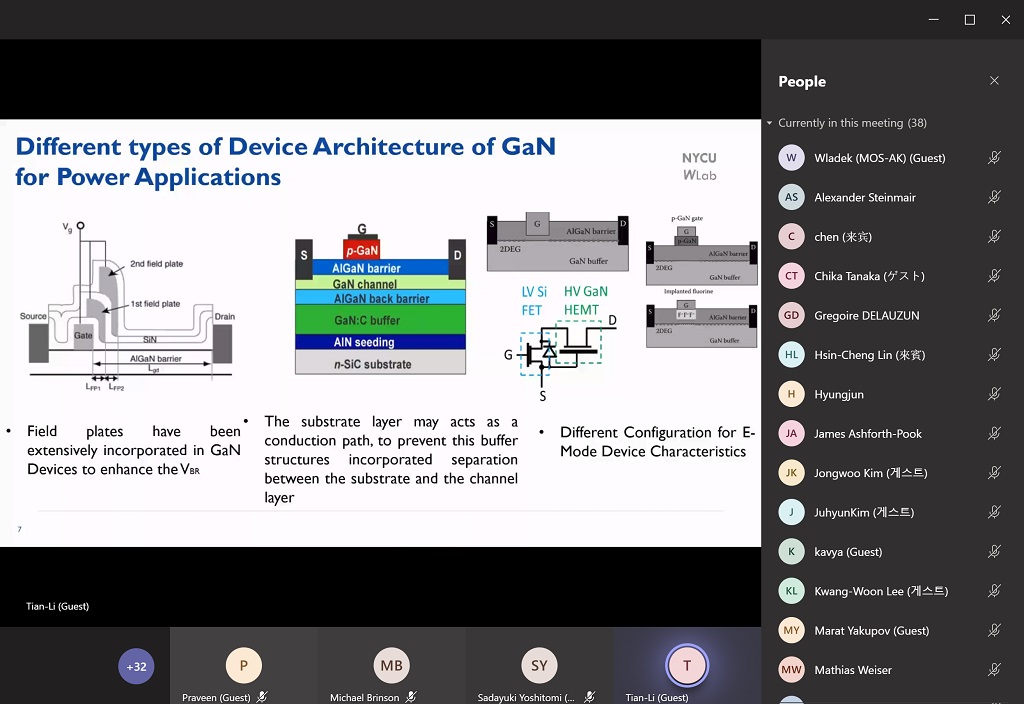
[1] Wang, Jie; Chen, Zhanfei; You, Shuzhen; Bakeroot, Benoit; Liu, Jun; Decoutere, Stefaan; "Surface-Potential-Based Compact Modeling of p-GaN Gate HEMTs" Micromachines (2021) 12, no. 2: 199; https://doi.org/10.3390/mi12020199
Abstract: We propose a surface potential (SP)-based compact model of p-GaN gate high electron mobility transistors (HEMTs) which solves the Poisson equation. The model includes all possible charges in the GaN channel layer, including the unintended Mg doping density caused by out-diffusion. The SP equation and its analytical approximate solution provide a high degree of accuracy for the SP calculation, from which the closed-form I–V equations are derived. The proposed model uses physical parameters only and is implemented in Verilog-A code.


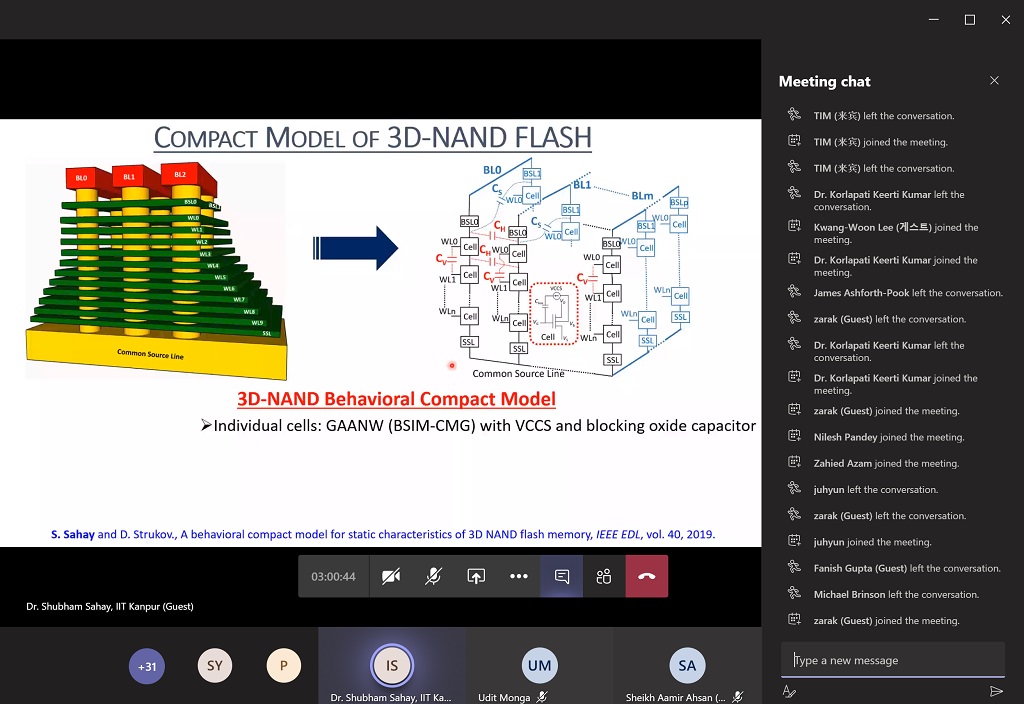
[Kioxia] Less is more: the challenge of #3D-#NAND memory https://t.co/N5eEZAOL16 #semi pic.twitter.com/Tm7fNXTynD
— Wladek Grabinski (@wladek60) February 22, 2021
#TSMC vs #Intel https://t.co/kNtoOcTRFx #semi @mannerisms @semiwiki pic.twitter.com/eMLyKrFdY1
— Wladek Grabinski (@wladek60) February 22, 2021
[https://t.co/FrgrQhA6mP] #India needs chipset manufacturers — lots of them. Here is why. https://t.co/VrJw27rpFp #semi pic.twitter.com/nq0KKtrJVP
— Wladek Grabinski (@wladek60) February 22, 2021
[3D Printing Industry] Researchers open up low-cost #opensource #microfluidics #3D printing - https://t.co/VwPoWIzI72 #semi pic.twitter.com/OyfmccoCb9
— Wladek Grabinski (@wladek60) February 22, 2021
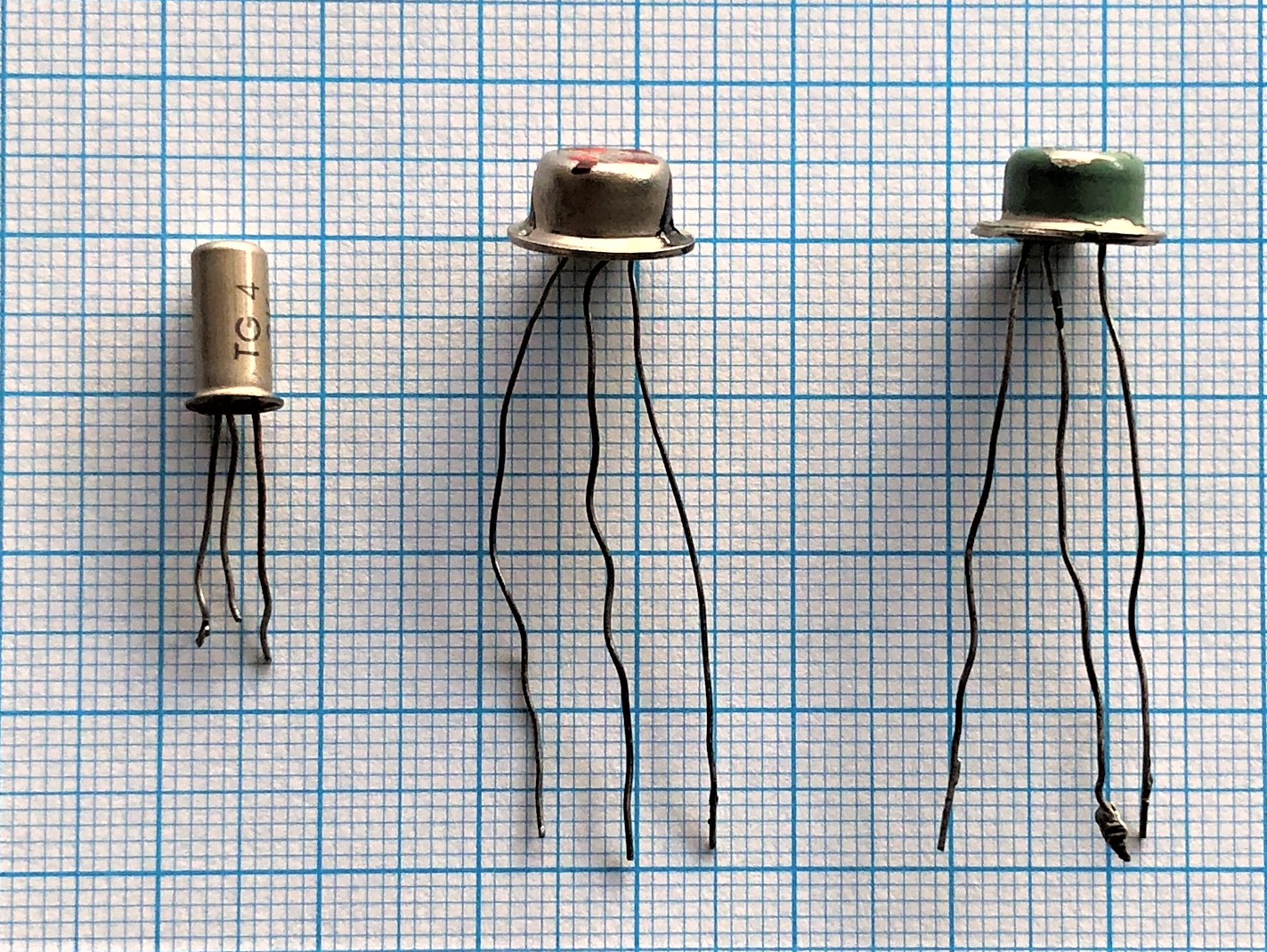
The TG1-TG5 series transistor are the first industrially mass-produced BJT transistors in Poland. The serial production was started by the TEWA Semiconductor Factory, Warsaw, in early1960s. Then, the TG50-TG55 series, was also manufactured by the TEWA in 1961–1962.
The TG4 (see Pic: below) is low power, low frequency, pnp germanium (Ge) alloy transistor (with 75 mW max collector power) [1].
The TG50 (below) is medium power, low frequency, pnp germanium (Ge) alloy transistor (with 175 mW max collector power) [2].
An initial stage of Polish semiconductor microelectronics research activities has been reviewed by Prof. Jerzy Pułtorak. In his paper [3], he has reviewed activities of leading Polish R&D groups starting from Department of Electronics, Polish Academy of Sciences (PAN) founded on July 4, 1952 till foundation of the Instytut Technologii Elektronowej (ITE, Warsaw) early 1960 (now Sieć Badawcza Łukasiewicz - Instytut Mikroelektroniki i Fotoniki). The first, in Poland, experimental germanium point-contact transistor TP-1 [4] has been developed by Prof. Rosinski just after John Bardeen, Walter Brattain and William Shockley have invented a semi-conductor triode (transistor) [5] on December 23, 1947.
#Linux Foundation, #DARPA collaborate on #opensource for #5G https://t.co/AHyNjyTjHJ #semi pic.twitter.com/2BrfkspWSl
— Wladek Grabinski (@wladek60) February 18, 2021


